
Why the Type of Cinnamon You Choose Truly Matters
Cinnamon is one of the world’s most cherished spices, valued for its warm aroma, subtle sweetness, and versatility across culinary traditions. Yet, many consumers remain unaware that what is commonly referred to as “cinnamon” actually comes in two distinct forms: Ceylon cinnamon and Cassia. Although they share certain sensory characteristics, these two products differ significantly in origin, flavour profile, chemical composition, health implications, and price. Understanding these differences helps consumers make more informed choices aligned with their culinary needs and well-being.
1. Botanical and Geographical Origins
Ceylon Cinnamon (True Cinnamon)
-
Scientific name: Cinnamomum verum or Cinnamomum zeylanicum
-
Primary origin: Sri Lanka (formerly Ceylon), with smaller production in southern India and Madagascar.
-
Notable feature: Often referred to as “true cinnamon,” it is harvested from the delicate inner bark of the Ceylon cinnamon tree.
Cassia (Common Cinnamon)
-
Scientific name: Primarily Cinnamomum cassia, Cinnamomum burmannii, and Cinnamomum aromaticum
-
Primary origin: China, Indonesia, and Vietnam.
-
Notable feature: More robust and thick-textured bark, widely produced and therefore more commonly found in global markets.
2. Appearance and Physical Characteristics
Ceylon Cinnamon
-
Light brown or tan in colour.
-
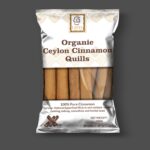
Thin, fragile, paper-like layers rolled into multiple concentric quills.
-
Can be easily broken between the fingers due to its delicate structure.
Cassia
-
Darker reddish-brown colour.
-
Thick, hard bark rolled into a single, dense curl.
-
Tough texture that requires more force to break or grind.
3. Flavour and Aroma Profiles
Ceylon Cinnamon
-
Subtler, sweeter, and more complex.
-
Offers citrusy and floral notes.
-
Preferred in desserts, high-end baking, teas, and refined culinary applications.
Cassia
-
Stronger, sharper, and more pungent.
-
Characterised by a bold heat and spiciness.
-
Common in commercial baked goods, spice mixes, and savoury dishes requiring a more assertive flavour.
4. Chemical Composition and Health Considerations
Ceylon Cinnamon
-
Contains very low levels of coumarin, a naturally occurring compound that can be harmful to the liver when consumed in large amounts.
-
Rich in antioxidants and often preferred for regular or medicinal use due to its safer chemical profile.
Cassia
-
Contains significantly higher coumarin content, especially in Chinese and Saigon varieties.
-
Acceptable for occasional culinary use, but not recommended for high-frequency consumption.
5. Price and Market Availability
Ceylon Cinnamon
-
More labour-intensive to harvest and process.
-
Less widely produced, making it more expensive.
-
Often marketed as a premium product and clearly labelled as “Ceylon” or “True Cinnamon.”
Cassia
-
Cheaper and more abundant.
-
The default cinnamon found in most supermarkets unless otherwise specified.
-
Frequently used in mass-produced foods due to its low cost and strong flavour.